Motorsport
Competitions involving self-powered vehicles across multiple disciplines.

Motorsport encompasses sporting events, competitions, and related activities primarily involving automobiles, motorcycles, motorboats, and powered aircraft. It includes disciplines such as circuit racing, rallying, and trials, governed by various bodies like the FIA and FIM, and has evolved from early prearranged match races to a globally organized sport.
- first_US_motor_race
- 1895 Chicago Times-Herald race
Lore & Background
The Automobile Club de France (ACF), founded in 1895, is the oldest national automobile club, not an international governing body; the FIA (formed in 1904) is the international governing body for automobile sport. The FIA now governs four-wheeled vehicles, while the FIM governs two-wheeled motorcycling and three-wheeled motorcycles. However, three-wheeled cars are classified as automobiles under FIA jurisdiction, not FIM. Within the FIA, each National Sporting Authority (ASN) is the sole authority in its nation. Not all nations have an FIA-affiliated authority; some disciplines, like banger racing in the UK, are claimed by other bodies. Formula One is an international championship governed by the FIA.
Reader's Guide
Motorsport's significance lies in its evolution from informal, illegal road races to a highly regulated global industry. The 1867 race in England and the 1878 Wisconsin race represent early milestones, but the 1894 Paris-Rouen event is widely considered the first true automobile competition. The establishment of the FIA in 1904 provided a framework for international governance, though alternative bodies exist for some disciplines. Circuit racing replaced dangerous city-to-city races, improving safety and spectator appeal. Formula One and the Indianapolis 500 became iconic championships, showcasing technological innovation and driver skill. Motorsport's legacy includes its role in automotive development, entertainment, and international sporting cooperation, as recognized by the International Olympic Committee. The sport continues to adapt, with electric racing series like Formula E emerging, while preserving traditions from its early days.
Did You Know?
- The first prearranged match race of self-powered road vehicles occurred on August 30, 1867, in England.
- The first US automobile race was the 1895 Chicago Times-Herald race.
- The 1894 Paris-Rouen event is widely accepted as the world's first motorsport event involving automobiles.
- The Automobile Club de France (ACF), founded in 1895, is the oldest national automobile club, not the international governing body; that role belongs to the FIA.
Origins: From Steam Carriages to the First Automobile Races
The story of motorsport stretches back further than most enthusiasts realize. On the early morning of August 30, 1867, two self-powered road vehicles met for a prearranged match race in northwest England, covering eight miles between Ashton-under-Lyne and Old Trafford, Manchester. Isaac Watt Boulton's steam locomotive, developed from a scrapped light-rail vehicle, edged out Daniel Adamson's carriage, though both competitors were technically violating the red-flag law in force at the time. Decades later, the Wisconsin legislature offered a substantial purse for the first American motor race, run on July 16, 1878, over a 200-mile route threading through several Wisconsin towns. Only two entrants actually competed, identified by their towns of origin. The 1894 Paris-to-Rouen contest, organized by the French newspaper Le Petit Journal, is widely regarded as the world's first true motorsport event involving what we now call automobiles. In the United States, the Chicago Times-Herald race of November 1895, a sixty-mile run between Chicago and Evanston, is considered the first American motorsport event. The Gordon Bennett Cup followed in 1900, and motorsport even appeared as a demonstration event at the 1900 Summer Olympics.
Governance: The FIA, National Authorities, and the Rules Architecture
The organizational architecture of motorsport is layered and complex. At the top sits the Fédération Internationale de l'Automobile, established in 1904, which claims sole international authority over automobiles and land vehicles with four or more wheels. Its counterpart for one-to-three-wheeled vehicles is the Fédération Internationale de Motocyclisme. Both bodies hold recognition as international sports federations by the International Olympic Committee. Beneath the FIA, each nation's affiliated National Sporting Authority serves as the sole recognized authority within its borders. These ASNs vary widely in structure: some operate as private companies like Motorsport UK, others receive state support like France's FFSA, and in the United States, ACCUS functions as a council of sanctioning bodies representing the nation at FIA meetings. Permission from ASNs is required to organize events under their rules, and participants must hold their licenses. Below this level, ASNs, affiliated clubs, or independent commercial promoters organize individual events, which collectively form series, and groupings of competitions that underpin championships, cups, or trophies. Not all nations or disciplines fall within the FIA's system; banger racing and stock car racing in the UK, along with SCORE International and NASSAR in the US, operate outside the FIA affiliation framework.
Disciplines and the Pivotal Shift to Closed-Course Racing
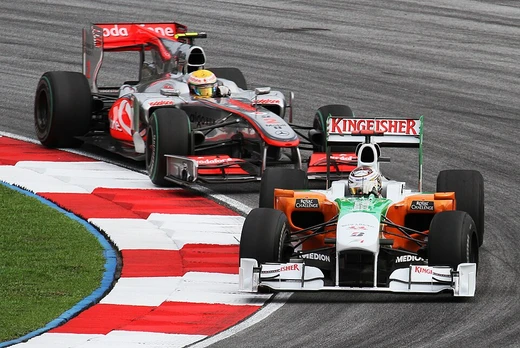
Motorsport encompasses a wide array of disciplines, each with its own objectives and specific rules. The broadest examples include circuit racing, rallying, and trials. Within these, further categorization occurs by vehicle type, surface type, or propulsion method, giving rise to subcategories such as formula racing, stock car racing, touring car racing, and sports car racing. Governing bodies set general rules for each discipline but permit supplementary regulations to define the character of a particular competition, series, or championship. A pivotal shift in the sport's history was the transition from point-to-point city-to-city racing to closed-course circuit racing. This change was driven by both spectator appeal and growing safety concerns, which led regulators to mandate closed, marshalled, and policed circuits on closed public roads. The FIA's International Sporting Code defines racing as two or more cars competing on the same course simultaneously. Circuit racing takes place on sealed-surface courses at permanent autodromes or temporary street circuits, with competitors racing over a set number of laps or a set time period. Aspendale Racecourse in Australia, opened in 1906, holds the distinction of being the first purpose-built motor racing track in the world.
Shaping the Modern Sport: The Impact of the World Wars
The two World Wars left a lasting imprint on the trajectory of motorsport. In the aftermath of World War I, European countries began organizing Grand Prix races over closed courses, marking a maturation of the sport's competitive structure. Across the Atlantic, American motorsport took a different path, with dirt track racing gaining significant popularity during the same period. The post-World War II era brought further formalization. In Europe, the Grand Prix circuit became more formally organized, establishing the structured championship racing that would define the sport for decades to come. In the United States, stock car racing and drag racing became firmly established as major disciplines, cementing the country's reputation for high-speed, accessible competition. These divergent paths—European closed-circuit elegance versus American open-road and oval-track spectacle—shaped the global motorsport landscape that persists today. The period also saw the consolidation of governing structures, with the FIA and its national authorities working to standardize rules across increasingly diverse disciplines, from the formula and touring car categories to the stock car and drag racing formats that had taken root in American soil.
Frequently Asked Questions
What exactly is motorsport?
Motorsport is the umbrella term for competitive events involving self-powered vehicles such as cars, motorcycles, motorboats, and powered aircraft. It covers a wide range of racing formats from closed-circuit competition to off-road rallying and trials.
When was the first motor race held in the United States?
The first US motor race took place in 1895 and was sponsored by the Chicago Times-Herald. This early event marked the beginning of organized automotive competition on American soil.
Which organizations govern international motorsport?
The FIA oversees automobile racing worldwide, while the FIM handles motorcycle competition. These bodies set regulations, safety standards, and championship structures for their respective disciplines.
What disciplines fall under the motorsport umbrella?
Motorsport spans circuit racing, rallying, and trials as its core disciplines, alongside events for motorboats and powered aircraft. Each category carries its own rules, venues, and competitive formats.
How did motorsport evolve from its early days?
Motorsport grew out of informal prearranged match races between individual drivers into a globally structured sport with standardized rules and international championships. Today it operates as a highly organized industry spanning dozens of countries and vehicle classes.
More in Motor Sports 1-24
Spotted an error? Know more?
This is a living reference — every entry is fact-audited, and reader corrections feed straight into our audit queue. Suggest an edit · See this site's audit record