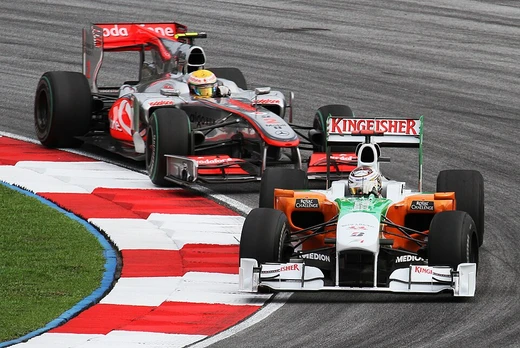
Grand Prix motor racing
Originating in France, Grand Prix racing became the pinnacle of motorsport.

Grand Prix motor racing is a form of motorsport competition that originated in France as early as 1894, evolving from simple road races between towns into endurance tests for car and driver. It is commonly abbreviated as "GP" or "GP racing," and its modern pinnacle is the Formula One World Championships, where each event is still called a Grand Prix.
- origin
- France, 1894
- first_official_grand_prix
- 1906, organized by Automobile Club de France at Le Mans
- first_winner
- Ferenc Szisz (Renault)
- key_innovation
- Detachable wheel rims (Michelin) for faster tire changes
- notable_early_race
- Paris–Rouen rally (1894), won by Count Jules-Albert de Dion
Lore & Background
Grand Prix motor racing began with the Paris–Rouen rally in 1894, organized by the newspaper Le Petit Journal. Early races were held on open roads, leading to frequent accidents and deaths. The first event officially called a Grand Prix was the 1906 race organized by the Automobile Club de France at Le Mans, won by Ferenc Szisz in a Renault. This race was considered the first Grande Épreuve, meaning "great trial."
In the early 1920s, the Automobile Club de France attempted to retrospectively rename earlier races as Grands Prix de l'Automobile Club de France, despite some members dismissing this as a fiction. International racing colors were established through the Gordon Bennett Cup, first held in 1900. Grand Prix racing was governed by the Association Internationale des Automobile Clubs Reconnus (AIACR), founded in 1904, and later by its Commission Sportive Internationale (CSI) from 1922. Rules varied by country and race, often focusing on maximum weight to limit engine size. The detachable wheel rim, developed by Michelin, was a key innovation that helped Renault win the 1906 Grand Prix.
Reader's Guide
Grand Prix motor racing is significant as the foundation of modern Formula One and a key driver of automotive innovation. Originating in France in 1894, it began as road races between towns but quickly evolved into a test of endurance and speed, with early cars exceeding 100 mph. The 1906 French Grand Prix, organized by the Automobile Club de France, is widely regarded as the first true Grand Prix, introducing the term Grande Épreuve. The sport's governing body, the AIACR (later FIA), standardized rules and fostered international competition, with the Gordon Bennett Cup promoting national entries. Innovations like Michelin's detachable wheel rims improved race efficiency. Grand Prix racing's legacy includes the Formula One World Championships, where each event is still called a Grand Prix, and its influence extends to IndyCar, which also uses the term. The sport's early nationalism and evolving regulations laid the groundwork for modern motorsport's global appeal.
Did You Know?
- The first motoring contest was the Paris–Rouen rally on 22 July 1894, organized by the newspaper Le Petit Journal.
- The 1906 French Grand Prix at Le Mans was the first race regularly called a Grand Prix, won by Ferenc Szisz in a Renault.
- The detachable wheel rim, developed by Michelin, allowed faster tire changes and was key to Renault's 1906 victory.
- The Automobile Club de France attempted to rename earlier races as Grands Prix de l'Automobile Club de France, a move some members dismissed as a fiction.
Frequently Asked Questions
What is Grand Prix motor racing?
Grand Prix racing is a competitive motorsport discipline that traces its roots to late-19th-century France, where simple point-to-point road races gradually evolved into demanding endurance events testing both machine and driver. Today the term most commonly refers to the individual races that make up the Formula One World Championship, though the broader "GP" label still applies to several other top-level series.
Where and when did Grand Prix racing begin?
The earliest recognized event was the 1894 Paris–Rouen rally in France, won by Count Jules-Albert de Dion. These early road-to-road contests laid the groundwork for what would eventually become structured Grand Prix competition.
Who took victory in the first official Grand Prix?
Hungarian driver Ferenc Szisz, piloting a Renault, claimed the win at the 1906 Grand Prix held at Le Mans. The race was organized by the Automobile Club de France and is widely regarded as the first event to carry the official "Grand Prix" designation.
Why does Grand Prix racing matter in motorsport history?
It grew from informal French road races into the highest echelon of open-wheel competition, establishing the engineering and competitive benchmarks that define modern motorsport. Its legacy is visible in every aspect of today's Formula One calendar, where each round still carries the "Grand Prix" title.
More in Motor Sports 1-24
Spotted an error? Know more?
This is a living reference — every entry is fact-audited, and reader corrections feed straight into our audit queue. Suggest an edit · See this site's audit record